The game takes some time to load, please be patient.
Kindergarten
Welcome to the World of Kindergarten
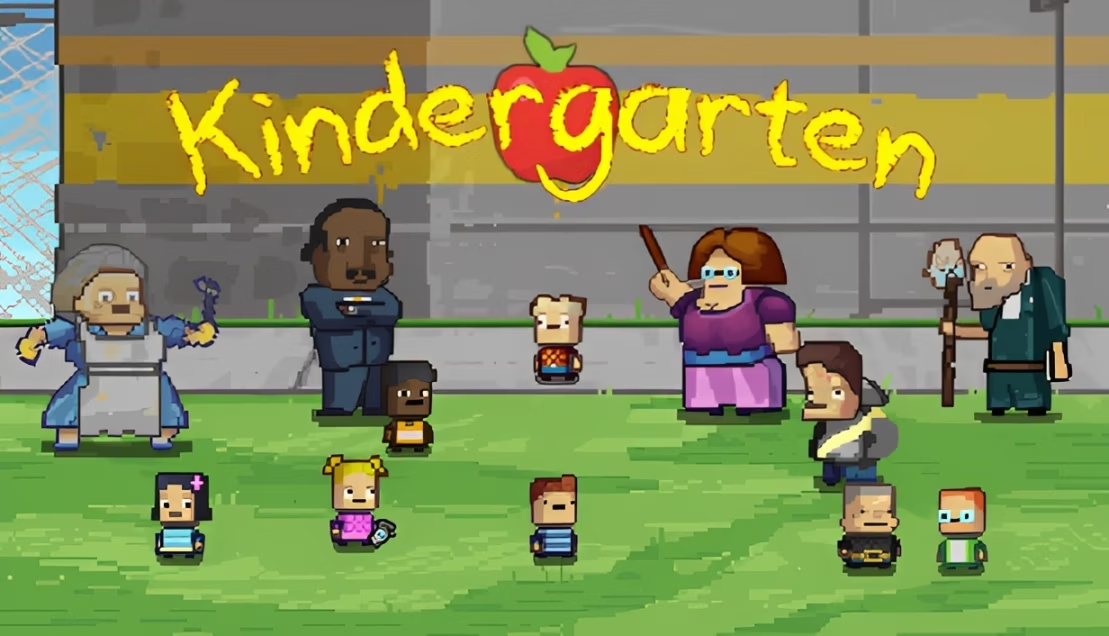
Kindergarten is a dark, pixel-style puzzle game where surviving the school day requires sharp wit and a tolerance for the bizarre and macabre.
A School Day Like No Other
Step into a classroom where the curriculum includes more than just ABCs and 123s. In this indie adventure, players find themselves trapped in a time-looping school day filled with eccentric classmates, a murderous janitor, and a teacher who seems more interested in "disposing" of students than educating them. The charming pixel art style masks a sinister reality, blending dark humor with challenging logic puzzles that will keep you on your toes from the morning bell until dismissal. This is no ordinary Kindergarten.
Unravel the Mystery
Every interaction in this quirky school environment serves a purpose. Whether you are helping a classmate with a suspicious task or dodging the principal’s watchful eye, your choices determine your survival. As you repeat the day, you’ll gather critical items and information, slowly piecing together the truth behind the school’s missing students and unsettling secrets. With branching paths and multiple endings to discover, every decision counts in this suspenseful and hilarious playground of mystery. Kindergarten challenges you to think outside the box.
How to Play Kindergarten
To survive a day in Kindergarten, you must master the art of observation and trial-and-error. The Kindergarten game operates on a time-loop mechanic where failure is not just common—it is expected. Your primary objective is to navigate the school day without getting killed or expelled, all while completing specific character quests to uncover the dark secrets hidden behind the school’s walls.
Master the Daily Routine
The school day is divided into several periods: Morning Time, Lunch, Recess, and Show and Tell. Each area functions as a self-contained puzzle. You have a limited number of "Apples," which represent your action points. Every significant interaction, such as talking to a classmate or giving an item to a teacher, consumes an apple. Once your apples are depleted, you must move to the next time period. Managing this resource is critical to ensuring you have enough energy to complete a Kindergarten quest before the final bell rings.
Controls and Interaction
The game features a streamlined control scheme that allows you to focus on the logic puzzles:
- Movement: Use the WASD or Arrow Keys to navigate your character through the pixelated Kindergarten halls and classrooms.
- Interaction: Press the Spacebar or Left-Click to talk to NPCs, examine suspicious objects, or confirm dialogue choices.
- Inventory: Use the E key or the mouse to access your backpack. Items collected in one run can often be brought back into the next day if you store them in your bedroom’s cubby, which is essential for unlocking advanced Kindergarten pathways.
Solving Character Quests
The heart of the gameplay lies in its branching narratives. By interacting with classmates like Nugget, Cindy, or Jerome, you can trigger specific storylines. These quests require you to perform tasks in a precise order. Because the Kindergarten school is a deathtrap, one wrong word to the Teacher or a suspicious move near the Janitor can lead to an instant "Game Over." However, every death provides a clue, teaching you which patterns to follow and which traps to avoid in your next attempt to solve the mystery of the missing student in Kindergarten.
Tips & Strategies for Kindergarten
To survive the school day and uncover the dark secrets lurking behind the chalkboard, you will need more than just a lunchbox. Use these essential strategies to navigate the deadly halls of Kindergarten.
Master the Art of Observation
Before committing to a specific questline, spend a few "throwaway" days simply watching. Pay attention to where characters move during recess, which items the Janitor carries, and the specific timing of the Teacher’s outbursts. Every death is a data point; use your failures to map out the Kindergarten schedule so you can be in the right place at the right time.
Manage Your Action Points Wisely
Your stamina is represented by green circles (monstermon cards or actions). Almost every significant interaction—from talking to certain NPCs to moving between areas—consumes an action point. If you run out of points before the Kindergarten bell rings, you may find yourself unable to complete a vital task. Plan your route to ensure you have enough energy to finish your current goal.
Hoard Your Coins
Money makes the world go 'round, even in a twisted school. You can find coins hidden in cubbies, behind objects, or earn them by completing small tasks for classmates. Saving your money allows you to buy critical items from the Monty (the school’s black-market merchant) or pay off characters to look the other way in Kindergarten.
Collect and Carry Over Key Items
The most important mechanic in Kindergarten is the ability to keep certain items across different "loops." If you earn a special item at the end of a successful day, check your bedroom at the start of the next run. Equipping the right item before you even step onto the Kindergarten school bus is often the only way to unlock specific character paths and secret endings.
Don't Be Afraid to Die
In this game, death is rarely a setback—it is a teacher. Dying often reveals what not to do, or triggers a hilarious piece of dialogue that contains a hint for a different puzzle. Since the Kindergarten day resets immediately, experiment with the most dangerous options first to see where they lead.
Complete One Quest at a Time
While it is tempting to try and help everyone at once, the game’s branching logic usually prevents you from completing multiple major character arcs in a single day. Focus on one student's request from morning until dismissal. Successfully completing a full questline usually rewards you with a permanent item that is required to solve the final mystery of Kindergarten.
Listen to the Dialogue Cues
The writing in Kindergarten is darkly humorous, but it is also packed with instructions. If a character mentions they "hate a certain person" or "wish they had a specific snack," take it as a direct objective. Solving the Kindergarten logic puzzles often requires giving the right item to the right person at the exact moment they express a need for it.
FAQ about Kindergarten
What is the main objective in Kindergarten?
The primary goal of Kindergarten is to survive the school day while uncovering the dark secrets hidden within the institution. Players must complete various "character quests" for their classmates, which involve solving puzzles and making specific choices. Because the Kindergarten game operates on a time-loop mechanic, your objective is to gather information and key items from each run to eventually piece together the mystery of the missing student.
How do I save my progress in the game?
Kindergarten uses a checkpoint system based on the school's daily schedule (Morning Time, Lunch, Recess, etc.). While your immediate actions are saved at the start of each period, the most important form of progress in Kindergarten is "Monstermon" cards and special items kept in your bedroom. Once you complete a full day and earn a character's quest item, it is permanently saved to your collection, allowing you to use it in future Kindergarten loops.
Why do I keep dying, and is it part of the game?
Death is an essential learning mechanic in Kindergarten. Whether it is a run-in with the deadly Janitor or a mistake in the Cafeteria, every "Game Over" provides critical information about what not to do. The Kindergarten game is designed around trial and error; you are expected to fail several times to learn the patterns, dialogue triggers, and environmental hazards necessary to succeed.
Can I complete all character quests in a single day?
No, it is impossible to complete every character's questline in one single in-game day in Kindergarten. Many quests require mutually exclusive actions or specific items that can only be obtained by helping a different student on a previous Kindergarten run. To see everything the game has to offer and reach the "Nugget Ending," you must play through the week multiple times, focusing on one student's path at a time.
What are Monstermon cards and how do I collect them?
Monstermon cards are the primary collectible in Kindergarten, parodying popular trading card games. There are 25 cards hidden throughout the Kindergarten school. You can find them by interacting with the environment, solving specific puzzles, or trading items with classmates like Nugget. Collecting these cards is not just for fun—gathering the full set is required to unlock the secret ending of Kindergarten and special achievements.
Is Kindergarten suitable for all ages?
Despite the pixel art, Kindergarten contains dark themes and humor. The Kindergarten experience is meant for those who enjoy twisted narratives. Every day in Kindergarten brings a new challenge for the player to overcome. If you enjoy puzzle games, Kindergarten is a perfect choice. Exploring the Kindergarten map is half the fun! There is always something new to find in Kindergarten.